Application
& Criteria
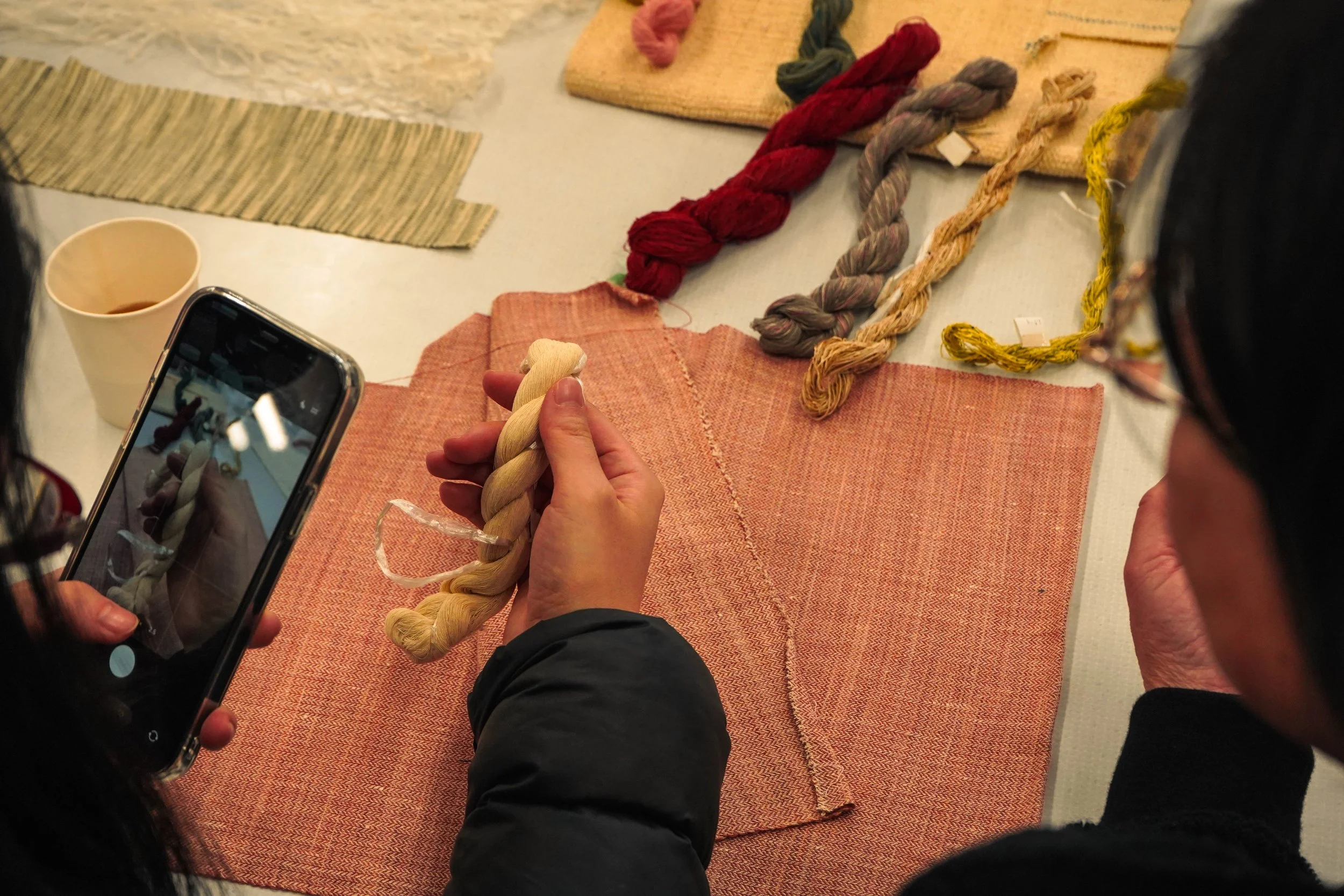
Photo by Anne Fehres & Luke Conroy
Expected Outcomes & Engagement
Participants in the AKIYA AIR IWAMI 2026 programme are expected to immerse themselves deeply in the cultural, historical, and material contexts of Yunotsu, Gotsu, and the wider Iwami region. Through engagement with local residents, craftspeople, and landscapes, they will undertake research and creative exploration that responds to the unique character of each location.
Building on the positive outcomes and local impact of the AKIYA AIR programme in Yunotsu over the past two years, both Gotsu and Omori (in the Iwami Ginzan area) have expressed a strong interest in participating as host locations. These communities see the programme as an opportunity to introduce new international and creative perspectives to local residents, while fostering meaningful exchange between regions.
At the same time, the programme explores how challenges faced by rural areas, such as vacant houses and population decline, can be approached as opportunities. The abundance of unused space, combined with rich natural environments and deeply rooted craft and cultural traditions, offers a unique context that can inspire new forms of artistic and creative practice.
The outcomes will vary depending on each participant’s discipline and approach. Ranging from visual or spatial works, films, material experiments, and written essays, to conceptual or design-based proposals.
Regardless of form, all outcomes should reflect a meaningful connection to the region and demonstrate each participant’s response to their experience.
Participants will present the results of their residency in both Gotsu and Yunotsu, sharing their work with local communities, collaborators, and stakeholders. Additional opportunities for presentations and exhibitions are currently under consideration and will be announced once confirmed.
Participants are also expected to contribute to the maintenance and care of their living and working environments during the residency, reinforcing the collaborative spirit and approach to revitalisation that defines the AKIYA AIR programme.
Desired Participant Profiles
Artists / Designers
Practitioners working across disciplines who engage in creative production, including visual art, object-making, spatial design, or other forms of expression. Applicants are encouraged to explore ways of connecting their practice with the local context.
Researchers
Individuals with a strong interest in investigating regional culture, history, environment, or social dynamics. Applicants should be motivated to conduct in-depth, field-based research and engage with local knowledge and perspectives.
Context-driven Practitioners
Professionals from diverse fields who are able to develop creative, curatorial, or research-oriented projects through active engagement with the region. This includes those whose work emerges through dialogue, collaboration, and sustained interaction with local communities and environments.
Application
Period of Open Call
Monday, 6th April - Friday, 5th June 2026 (UTC + 2 CET)
Basic Residency Period
Maximum period: 1st October 2026 – 20th December 2026
Number of Residents Accepted
Gotsu: 1 artist/researcher
Yunotsu: 2 artist/researcher's group consists of a maximum of 3 persons
Relevant Field
Artists / Designers
Practitioners working across disciplines who engage in creative production, including visual art, object-making, spatial design, or other forms of expression. Applicants are encouraged to explore ways of connecting their practice with the local context.Researchers
Individuals with a strong interest in investigating regional culture, history, environment, or social dynamics. Applicants should be motivated to conduct in-depth, field-based research and engage with local knowledge and perspectives.Context-driven Practitioners
Professionals from diverse fields who are able to develop creative, curatorial, or research-oriented projects through active engagement with the region. This includes those whose work emerges through dialogue, collaboration, and sustained interaction with local communities and environments.
Notification of selected artist
Stichting MONO JAPAN will notify the selected artist by email around Monday, 29th June 2026. The announcement is scheduled for around the same period.
Selection of Finalists
Finalists will be notified by email from Stichting MONO JAPAN around 12th June 2026
Final Selection
Period for online interviews: between Monday, 15th June and Friday, 26th June 2026.
Final presentations in Japan
A public presentation will take place on
Friday, 18th December 2026 in Yunotsu, and on
Saturday, 19th December 2026 in Gotsu.
The exhibition will be held in both locations between Friday 18th and Sunday 20th December 2026.
Judging Panel & Advisory Board
Gotsu Future Education Design Institute (GFEDI)
MONO JAPAN Foundation
MUJUN
The open call is between
Monday, 6 April ~ Friday, 5 June 2026 (UTC + 2 CET).
Please apply using the application form below button.
Application Requirements
The applicant must
Be available to stay and actively participate in the program for a continuous period between September and the end of November 2026 (approximately 2.5–3 months). Short-term stays are not permitted, as the program prioritizes sustained engagement, in-depth research, and meaningful relationship-building with the local community.
Be able to select either Gotsu or Yunotsu as the preferred residency location at the time of application, and develop a proposal accordingly.
Understand the purpose of the residency and commit to fully engaging with the program throughout the entire stay.
Demonstrate a proactive attitude toward research, creative production, and exchange within the local context.
Be able to communicate at a basic level in either English or Japanese.
Be willing and able to live and share space with other residents (1–3 people) during the residency period.
Be in good physical and mental health, with no foreseeable conditions that would hinder participation during the stay.
Be based in Shimane Prefecture for the full duration of the program.
Be free from restrictions on occupational or creative activities during the residency period.
Be willing and able to organize at least one public-facing program for the local community (e.g., workshop, lecture, talk event, or other participatory activity).
Contribute to the local community by implementing at least one program that is open and accessible to residents, fostering meaningful exchange.
Participate in residency-related events organized by GFEDI, including presentations, open studios, or talks.
Participate in the final presentation and/or exhibition at the end of the residency.
Agree to cooperate with documentation and communication efforts, including photography, video recording, and dissemination for archival and promotional purposes.
Donate one piece or outcome of their work at the end of the residency to Yunotsu or Oda City as a contribution to the local context.
Arrange and cover any necessary insurance (including accident and travel insurance) prior to arrival in Japan.
Understand that, in principle, accompanying family members are not permitted during the residency period.
Cover the expenses required for participation (including travel, production, and living costs) independently, with the support of the subsidy provided by the program.
The applicant must have professional experience in a design or an art field; this program is not open to students. Participants must reside in Japan for the duration of the program. Apart from receiving technical guidance, applicants are expected to be self-sufficient in their daily life in Yunotsu. The applicant should have respect for local culture, history and people.
The following requirements must also be met while on the programme.
Available Support & Services
The program offers the following support to selected participants:
Communication Support (English / Japanese)
Assistance to facilitate communication in daily life and engagement with local communities.Project Planning and Coordination Support
Guidance on project development, production consultation, and coordination with local stakeholders and communities.Facilitation of Cultural Exchange and Local Collaboration
Support in building connections and fostering meaningful exchange with the region and its residents.Accommodation
Provision of accommodation free of charge, including utilities.Transportation Support
Access to a vehicle free of charge (fuel costs to be covered by the participant)
Provision of bicycles for daily transportation
Workspace and Equipment Access
Access to equipment, tools, and selected materials at the SUKIMONO Workshop in Gotsu to support research and production activities.
Details regarding available equipment and facilities will be arranged individually after selection.
Please note:
Specific conditions regarding accommodation and workspace will be coordinated after the final selection of participants.
Creator’s Expense
In principle, the following costs are to be covered by the participant:
Round-trip travel expenses between the participant’s place of residence and the residency location
Production and material costs related to the participant’s project
Daily living expenses
Food expenses (estimated at approximately JPY 30,000–50,000 per month)
Personal transportation costs during the stay
Fuel costs when using a provided vehicle